Sunday, July 15, 2007

A few pics from this week.
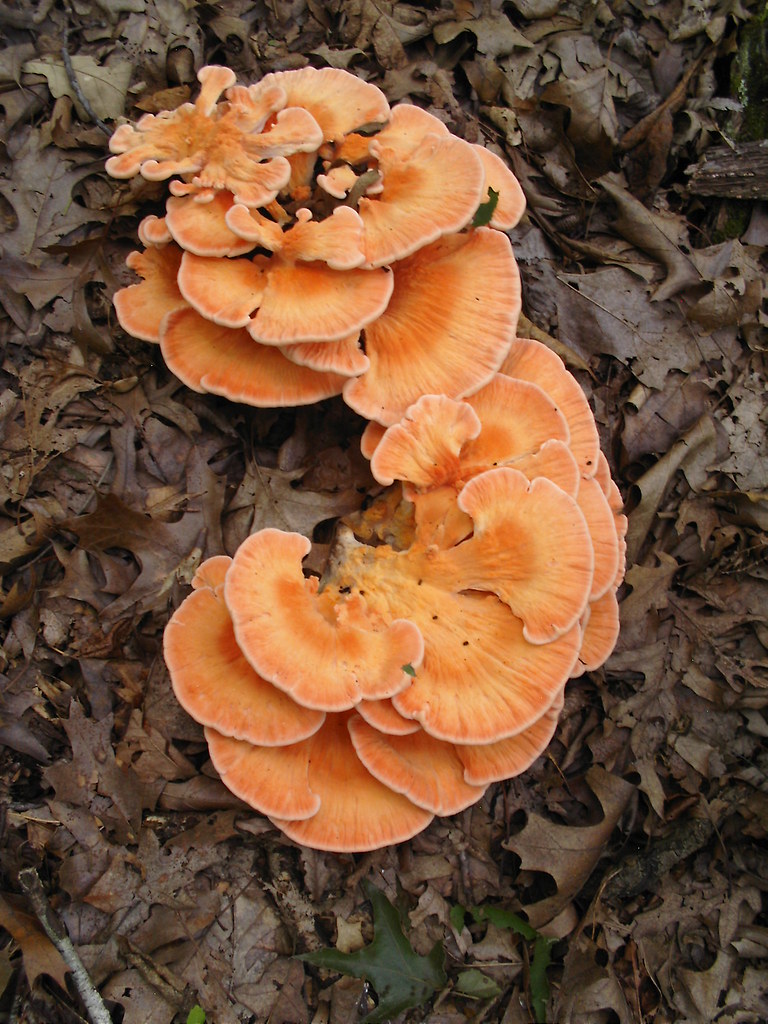
Lots of mushrooms out right now but they are drying up in the heat if you aren't lucky enough to catch an afternoon thunderstorm. Here is a nice 3 pound chicken I found this week.


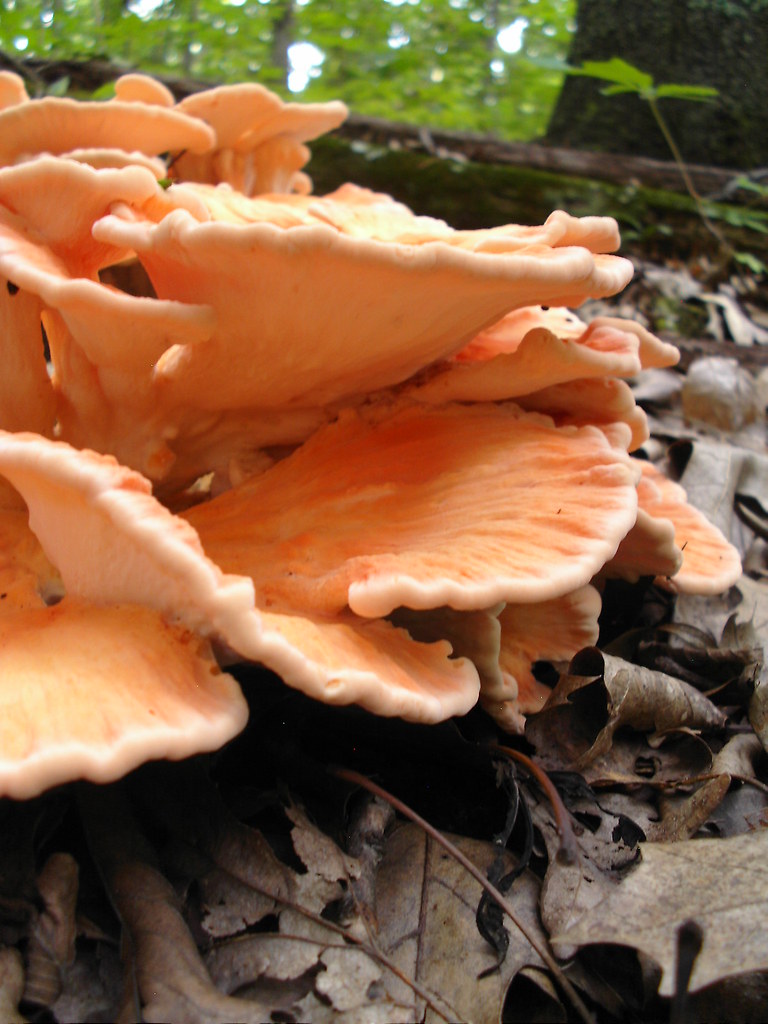
Here is a close up. This was a the white-pored variety.
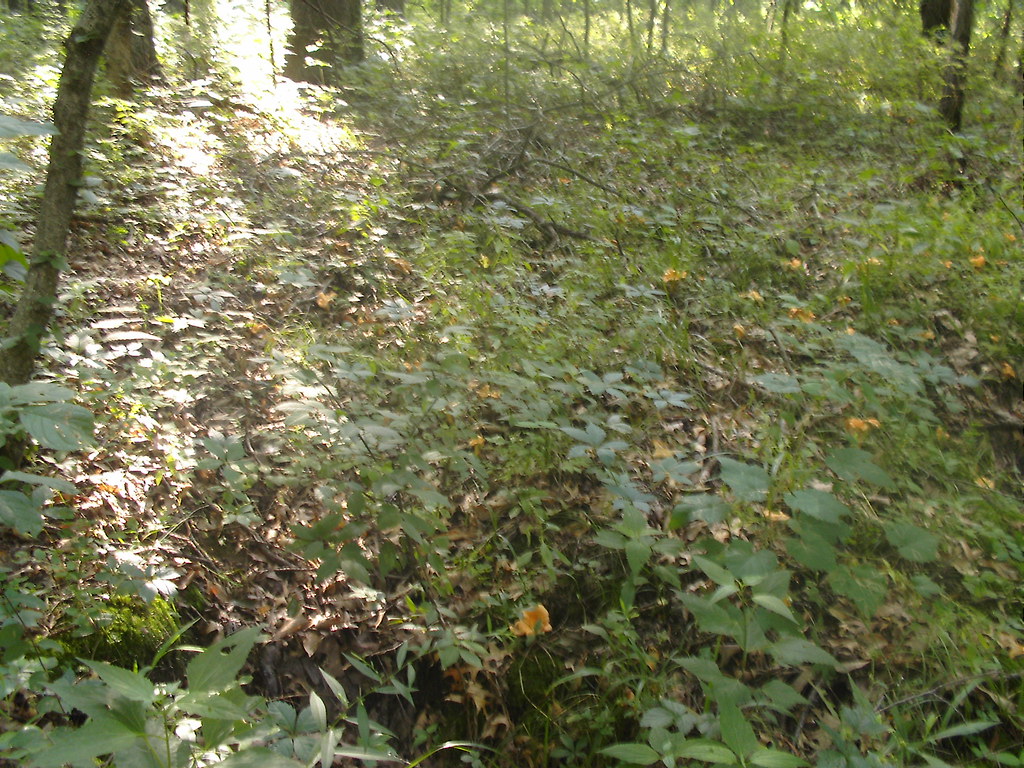
This was the starting edge of a good patch of smooth chants. I picked about 150 from this patch alone. Some were over 6 inches across.
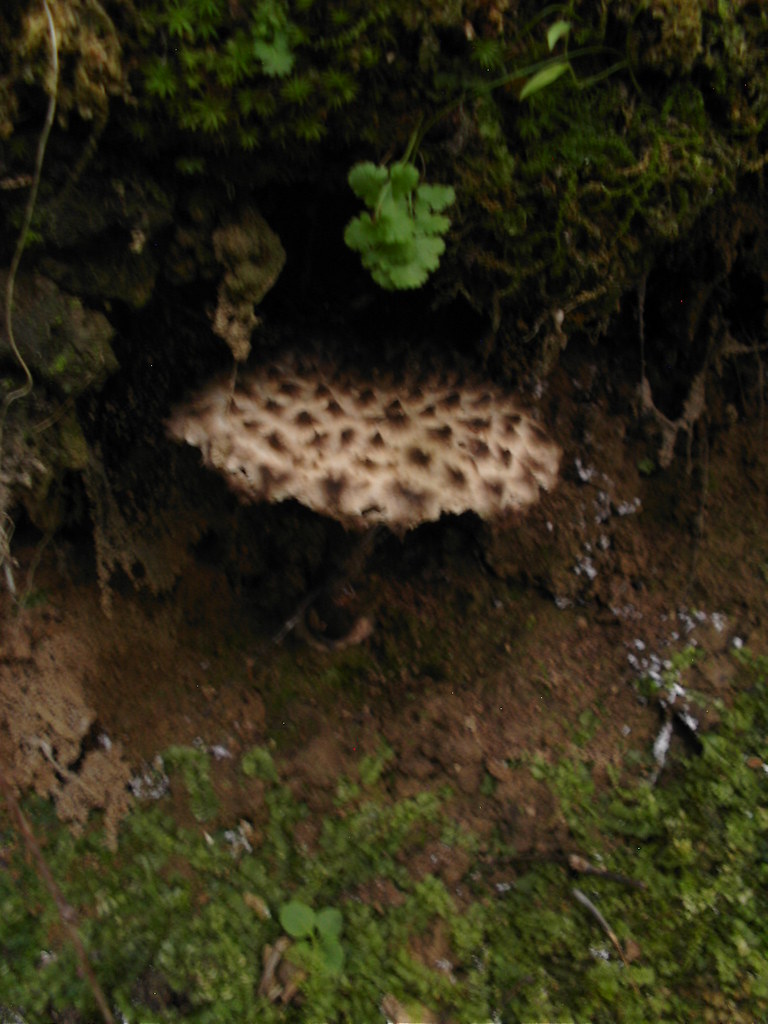
Here is an easily recognizable bolete, the Old Man of the Woods. This old one was hiding under an earthen shelf along a runoff creek. This is edible, though many stay away from this old hermit.


Here is a shot of some common yellow chanterelles. These were few and far between and often showed signs of drying out.
Here is a small coral mushroom starting out. Although there are some poisonous species none are known to grow in Missouri and many people enjoy eating these easily identifiable fungi.

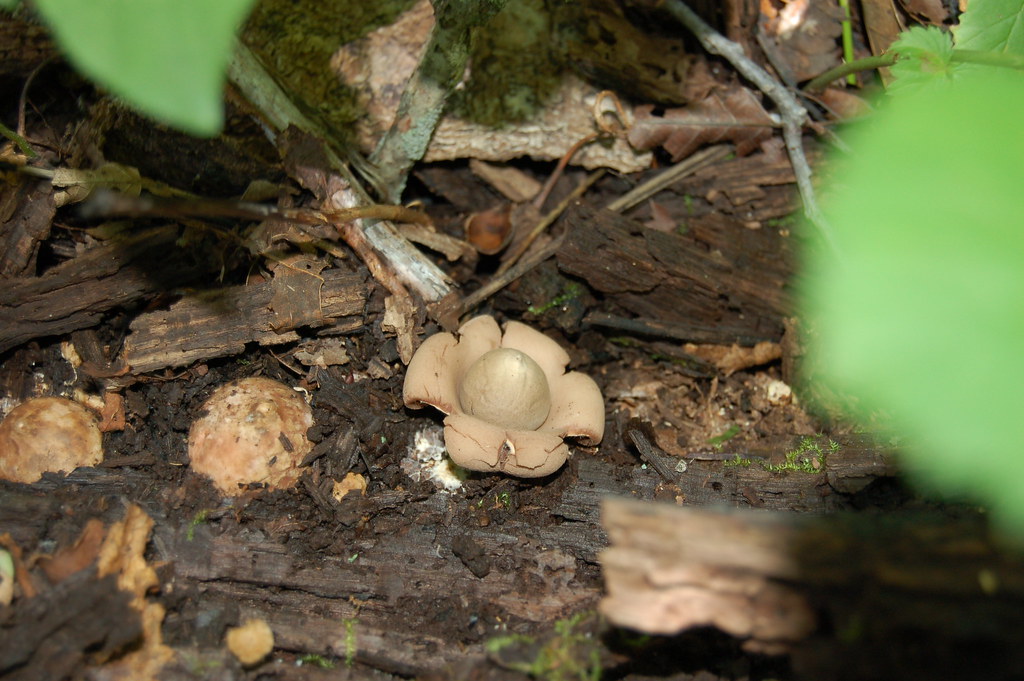
Here is a cool earthstar. I do not see these much because you really have to be looking to see them I was lucky to stumble across this one while picking chanterelles.
Sunday, July 08, 2007


Unknown Bolete (possibly Boletus Auripes)

I found this bolete that I have never seen before. It had a dark brownish red top and a buff/off white pores and stem with slight reticulation. If anyone knows what it is please let me know.
Here are some pictures.

A shot of the stem and pores.

Top (sorry it's slightly out of focus)


A Carpet of Orange

Went out to a completely new area today and picked over 15 pounds in about an hour and there were loads more out there. These were all smooth chanterelles and were found in mixed hardwoods (mainly hickory and oaks) around a small lake.

Here is a nice close up showing a top and a glimpse of the slight ridges on the underside of these smooth chants.


They were everywhere even growing right on the trail in glorious patches. I couldn't believe my luck. If anyone wants to find some, contact me at ahistory (at) centurytel (dot) net. I will tell you where to go in Boone County to find some. I could go back there for a week and not be able to pick them all. Conditions I guess were perfect.

Monday, July 02, 2007

Chanterelle Season is here

July officially begins the start of what looks to be a promising chanterelle season. I went out to check some patches last week and picked about a pound and a half in ten minutes. Hopefully all the rain we have had will help the smaller ones I left behind get bigger (though I haven't had as much luck with chants growing as I have with morels).

Here is another picture of some smooth chanterelles picked last week.
I have yet to find any common yellow chanterelles or cinnabars but I bet they are up now due to the weekend deluge.

My computer has been acting up so I have not been able to post for a while. I will try to post more often now that my computer is back up and running (for now).

An elusive one for me up until this year was the black chanterelle or "black trumpet" mushroom (Craterellus cornucopiodes). I found these for the first time early in June. The bigger ones had dried out already and the fresh ones were very small due to the lack of rain back then. I will have to go back and check them again, and now I know where to look. The ones I found were in a draw in between fields near the tops of a slopes. There was little ground cover and leaves but lots of moss. Trees were mainly oak and other mixed hardwoods (hickory, ash, etc).

Here is the first one I spotted. They are very easy to miss and usually the ones in full moss stand out best.


Here is a close up of a small tiny cluster that might have had a chance if it had rained in the five days prior. You can see some larger dried up clusters in the upper right (out of focus).

I hope to find some common yellow chanterelles after all this rain so hopefully I will get some good pics of those for the blog.

Sunday, June 03, 2007

The Chickens Are Roosting


The summer mushrooms have started.Received a report from a fellow letter boxer who spotted a nice fresh sulfur shelf or chicken of the woods mushroom (Laetiporus sulphureus).
To give you an idea of the size of this one, the notebook running at the bottom is 10" long. There are no other mushrooms that look like this so it is an easily identifiable edible. Time to hit the hardwoods. Photos taken 6/1/2007 courtesy of The Happy Wanderer


The fronds can be prepared in many ways. In older specimens, only use the softer outer edges. Always cook this mushroom and never eat it raw. Also some people have an adverse allergic reaction to it, so when trying it only eat a little bit and then wait for an hour or so. If no adverse side effects (hives, etc) you should be good to go. Remember though always eat mushrooms in moderation. Eating too much of any mushroom (even morels) can be unpleasant.

For more specific information and additional pictures on the chicken of the woods check out:

http://www.mushroomexpert.com/laetiporus_sulphureus.html
and http://www.michiganmorels.com/beyond_the_morel/chickenofthewoods.html
For some good information on preparing and cleaning see this Hormel (of all places) glossary:
http://www.hormel.com/kitchen/glossary.asp?id=38170
Here are a couple recipes I have found and found to be very tasty.

POLYPORE OMELET

3 Tablespoons butter
1 cup diced Chicken of the Woods
1/4 cup shredded Monterey Jack or cream cheese
2 or 3 shallots, diced
1 Tablespoon chopped fresh parsley
5 or 6 eggs
1/2 cup cream or half and half
Salt and pepper

  • Melt the butter in a heavy frying pan over low heat.
  • Beat the eggs and cream, add salt and pepper to taste; pour into the pan.
  • As the eggs start to cook, sprinkle the Chicken of the Woods, cheese, shallots and parsley over the top.
  • Cook for 1 to 2 minutes more until the egg mixture sets.
  • Fold the omelet over and remove from the heat; cover and let sit for 1 minute.
(Wells, M., M. Rogers, R. Piekenbrook & D. Piekenbrook (1987). Wild Mushroom Cookery. Portland, OR: The Oregon Mycological Society. reprinted online at: http://hosts.cce.cornell.edu/mushroom_blog/?p=52)

Chicken-of-the-Woods Wild Rice

The wild rice harvest is well-managed in our state, so please seek out authentic wild rice for this meal-the flavor and texture is superior to cultivated varieties. (See Resources below. See also "Wild About Ricing," July-August 2004 Conservation Volunteer.)

Chicken-of-the-woods*, also known as sulfur-shelf, is a fall-fruiting, wood-decaying fungus common to Minnesota deciduous and pine forests. Growing on both live and dead wood, this species is a lethal tree pathogen that infects trees with brown rot. However, it is edible.

As with any new food--especially a wild mushroom--wisely introduce only a small portion to your diet. Most important of all, always eat chicken-of-the-woods well-cooked, never raw. Although there is no replacement for the chickenlike texture and bright color of this wild mushroom, you may substitute another mushroom, fresh or dried and reconstituted.

2 shallots, finely minced
1/4 c. butter
2 c. chicken-of-the-woods -mushrooms, cleaned and diced
1 c. hand-harvested wild rice, raw
4 c. chicken stock
salt and pepper
1/4 c. flat parsley, finely minced

In a 5-quart pan, briefly saute shallots in 2 T. butter over medium-high heat until translucent. Add mushrooms and saute for 10 minutes. In a 4-quart saucepan, melt remaining butter, add wild rice, and saute for 5 minutes. Combine with mushroom mixture and chicken stock. Add salt and pepper to taste. Cover and bring to boil over high heat. Reduce heat to low and simmer for 20 minutes. Uncover, fluff rice, add parsley, and if necessary continue heating on low to evaporate any remaining liquid.

*Information here is not complete for safe identification. Never collect wild mushrooms without expert knowledge.

(Recipe from Minnesota Meals of the Present: Recipes)

Thursday, May 31, 2007

Chanterelles

The chanterelles should be showing up in Mid-Missouri in June, usually closer to the end of the month. And as long as it stays moist, they can flush all the way through September in a good season. I find them in mixed hardwoods with lots of oak and hickory. I have noticed no particular associations with trees, but I do tend to find them along low lying dried up creeks and drainages more often then not. If you find one large patch along a stream continue walking down to where any runoff might have settled and you can usually find more patches down stream. To help the novice hunter I thought I would post a few photos from the last few years to differentiate them from their poisonous look-a-likes, the jack-o-lantern mushroom.


A mature common yellow chanterelle


A mature orange smooth chanterelle


Here is a photo of a lone Jack-o-lantern mushroom taken by a friend. Compared to the previous picture It is easy to see how this could be mistaken for a chanterelle. However, if you look close you can see the gills underneath on the Jack-o-lantern. The gills often run down the stem as pictured here.


The undersides of the smooth chant are, well, smooth, hence the name, and easily distinguished from those of the Jack-o-lantern. Chants also have a fruity, almost apricot, sweet smell to them that Jacks do not.


And Jacks grow from rotten/rotting wood. Sometimes this can be old decaying tree roots underground, so always be careful and look close for any buried wood.

Here are some clusters of Jack-o-lanters that I found in the fall of 2005. Notice on the big one how straight the gills are. Chanterelles do not have gills and the ridges often fork or form a "y" pattern. Jack-o-lanters gills do NOT fork.


This photo shows another distinguishing feature of Jacks. They usually grow in large clusters. Chanterelles on the other hand, tend to grow in patches of singles, doubles and triples. I have yet to find a larger cluster of chanterelles.


Here is a group of common yellow chanterelles. Notice they are not so clustered together.


Good luck and please report any of your finds. Always remeber to follow the mushroom hunter's crede "When in doubt, throw it out."

Thursday, May 03, 2007

The End of the Morel Season

Well the season is about over here and unless you want to travel north it's time to take a break from the woods. Don't get me wrong, I am not saying that there are no longer morels out there. I am sure there are a few still in good shape. However, they are few and far between and the warmer weather and recents rains have made the undergrowth come to life making the mushrooms hard to see. Not to mention the ticks. In my opinion it is just not worth the trouble this late in the season.

All in all I had a good season again this year, finding just under 1,000 total. I definately found more before the freeze than after by numbers, but probably an equal amount by weight since the late season ones were nice and plump. I will post a few pictures of some nice late season morels soon.

I use some common flowers to determine when to start and stop hunting and these have been pretty good determiners for me. I start the season when the dandelions in my yard bloom and I end the season when the blackberry bushes bloom. I am not sure why, but they seem to be good indicators for my area.

Now don't think you need to wait until next year. There are many other very tasty and easily recognizable mushrooms out there. And since few Mid-MO locals hunt them like they do morels, the only competition are bugs, turtles and deer. (and yes you have to be pretty slow to get beaten out by a turtle, but it has happened to me before).

The MO Department of Conservation has a good website discussing common poisonous and edible mushrooms in MO. I recommend first learning to identify the poisonous mushrooms before moving on to the edibles. Always follow the mushroom hunters rule: WHEN IN DOUBT THROW IT OUT. THere are old hunters and there are bold hunters, but there are no old and bold hunters.

As far as taste goes, I recommend oyster mushrooms when they are in their very fresh button stage. They can generally be found on old elm trees and logs for a few days after a good rain. Other mushrooms that rival morels in taste are the king bolete or porcini, the hen of the woods or maitake, and the chicken of the woods or sulpher shelf. I think the king is the hardest of all to find in Missouri. If you hunt Kings and have any tips, please send them my way. Maitake generally grow at the bottom of oaks and are really good while they are young. They can be chewy when they get older and long in the pore. Chicken of the woods are easily recognizable from their bright orange and yellow. they are usually found on rotting logs but can also be found growing out of cracks and scars in living trees (largely oak). Another tasty mushroom not included on the MDC site are hedgehog or sweet tooths. These are easily identify by the tiny teeth hanging down from the underside instead of gills or pores.

And my favortie mushroom of all (yes that's right morels are not the best tasting mushroom in my humble opinion) is the chanterelle, several varieties of which usually begin emerging in early June. I have found common yellow chants, smooth (orange) chants, and cinnabar (red) chants in many oak hardwood forests in my area. They smell fruity with a light apricot scent when fresh and can be found growing in patches ranging from just a few to incredible numbers. Last year I was hiking in July and found an old dried up patch of smooth chants that must have had over 1,000 mushrooms in a 60 square foot area. I can't wait to go back to it this year. That's another good thing about many summer and fall mushrooms. they tend to grow in the exact same place, so after a few years you go from mushroom hunting to mushroom picking.

If anyone would be interested in summer and fall mushroom hunting please feel free to contact me. I always welcome company and with the abundance of mushrooms there is always plenty to share.